The End of the World is Just the Beginning by Peter Zeihan
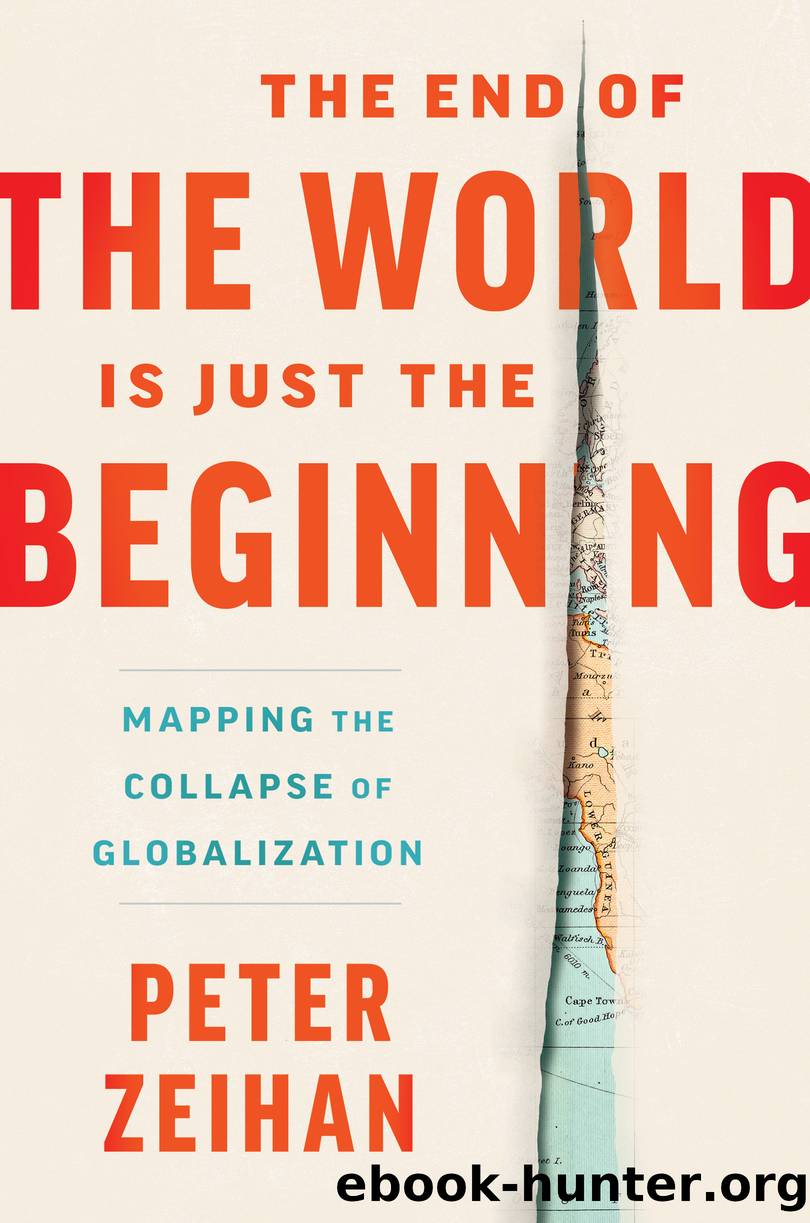
Author:Peter Zeihan
Language: eng
Format: epub
Publisher: HarperCollins
Published: 2022-04-22T00:00:00+00:00
THERE IS MORE TO OIL THAN OIL
No one simply puts raw oil in their tank. It must first be processed at a refinery. The supply chains of oil may not be nearly as complicated as they are for, say, computers, but the outcomes can be far more dramatic. No two crude oil streams have exactly the same chemical makeup. Some are gooey and laden with impurities, most commonly sulfur, which can make up to 3 percent of the crude oil by volume. Such crudes are called âheavy sours.â Some, like Canadaâs oil sands, are so heavy that they are solid at room temperature. Others are so pure they have the color and consistency of nail polish remover and are called âlight sweets.â
Between these extremes lies an entire worldful of other possibilities, each with its own specific chemical makeup. Each of the worldâs hundreds of refineries has a preferred input blend, which in the case of many older refineries was tailored to a specific oil field. This too is an outcome of the Order. In a safe world, there was nothing stopping crude from any particular source from reaching any particular processor. But post-Order? Anything that scrambles upstream production patterns or midstream transport patterns also scrambles everything in the energy sectorâs refinery downstream.
Running the âwrongâ crude in the worst case can cause major damage to multibillion-dollar facilities. Even in the best case it is certain to trigger something called run-loss, a not-so-fancy term that means exactly what it suggests: a certain percentage of the crude run through a refinery for processing is simply lost due to inappropriate input mixes. Run-loss increases quickly either when a refinery is asked to do something it was not designed to do or when it lacks access to the âcorrectâ crude oil blend. The Europeans, for example, love diesel, and Russiaâs Urals blend (a medium/sour crude) is a pretty good feedstock for refining diesel. Interrupt Urals flows, replace Urals with a different crude grade, and the Europeans are going to face serious product bottlenecks even if they can somehow keep their refineries running at their designed capacity. Considering oilâs price inelasticity issue, something as little as a 1 percent refinery loss can have massive impacts on customers.
Weâre looking at a lot more than 1 percent run-loss moving forward. Most of the worldâs refineries were designed to run on lighter, sweeter crudes because they have fewer contaminants and so are easier to process. Today most of the worldâs lighter, sweeter crudes come from American shale plays. Refurbishing refineries can be done, but it takes two things the new world will have in short supply: time and money. Besides, most retooling simply locks you into a new crude formula. In an unstable world, reliability of specific crude input streams can occur only if you are very close to the secure source. For most refineries, thatâs simply not a possibility.
Download
This site does not store any files on its server. We only index and link to content provided by other sites. Please contact the content providers to delete copyright contents if any and email us, we'll remove relevant links or contents immediately.
| Arms Control | Diplomacy |
| Security | Trades & Tariffs |
| Treaties | African |
| Asian | Australian & Oceanian |
| Canadian | Caribbean & Latin American |
| European | Middle Eastern |
| Russian & Former Soviet Union |
The Secret History by Donna Tartt(19092)
The Social Justice Warrior Handbook by Lisa De Pasquale(12191)
Thirteen Reasons Why by Jay Asher(8912)
This Is How You Lose Her by Junot Diaz(6889)
Weapons of Math Destruction by Cathy O'Neil(6281)
Zero to One by Peter Thiel(5802)
Beartown by Fredrik Backman(5756)
The Myth of the Strong Leader by Archie Brown(5509)
The Fire Next Time by James Baldwin(5447)
How Democracies Die by Steven Levitsky & Daniel Ziblatt(5219)
Promise Me, Dad by Joe Biden(5154)
Stone's Rules by Roger Stone(5088)
A Higher Loyalty: Truth, Lies, and Leadership by James Comey(4964)
100 Deadly Skills by Clint Emerson(4927)
Rise and Kill First by Ronen Bergman(4790)
Secrecy World by Jake Bernstein(4753)
The David Icke Guide to the Global Conspiracy (and how to end it) by David Icke(4720)
The Farm by Tom Rob Smith(4514)
The Doomsday Machine by Daniel Ellsberg(4490)
